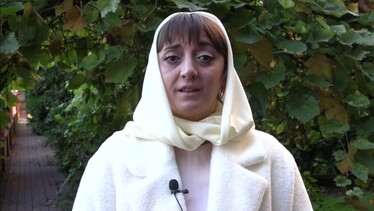
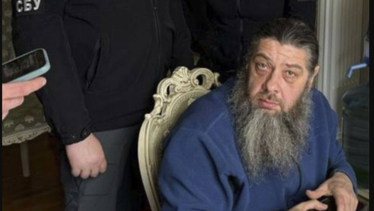
Metropolitan Arseniy of Sviatohirsk, Abbot of the Holy Dormition Sviatohirsk Lavra
(secular name – Ihor Fedorovych Yakovenko)
Date of birth – June 21, 1968
Place of birth – the settlement of Porosozero, Suoyarvsky District, Karelian ASSR
Metropolitan Arseniy has served as abbot of the Holy Dormition Sviatohirsk Lavra since January 20, 1995.
He joined the monastic brotherhood in 1993, when the Sviatohirsk Lavra was reopened after decades of Soviet rule. The metropolitan devoted his life to the restoration of monastic and liturgical life in the monastery.
At present, he is being held in custody in the Dnipro pre-trial detention center (SIZO).
🔴On April 24, 2024, the SBU – the Security Service of Ukraine (the Ukrainian successor to the KGB) – carried out searches at the Holy Dormition Sviatohirsk Lavra of the Ukrainian Orthodox Church, one of the three most important Orthodox monasteries in Ukraine bearing the title of Lavra.
The Sviatohirsk Lavra is an ancient and majestic monastery standing on the chalk Holy Mountains, on the high right bank of the Siverskyi Donets River, with caves hewn into the rock and ancient churches, where liturgical life has continued for many centuries.
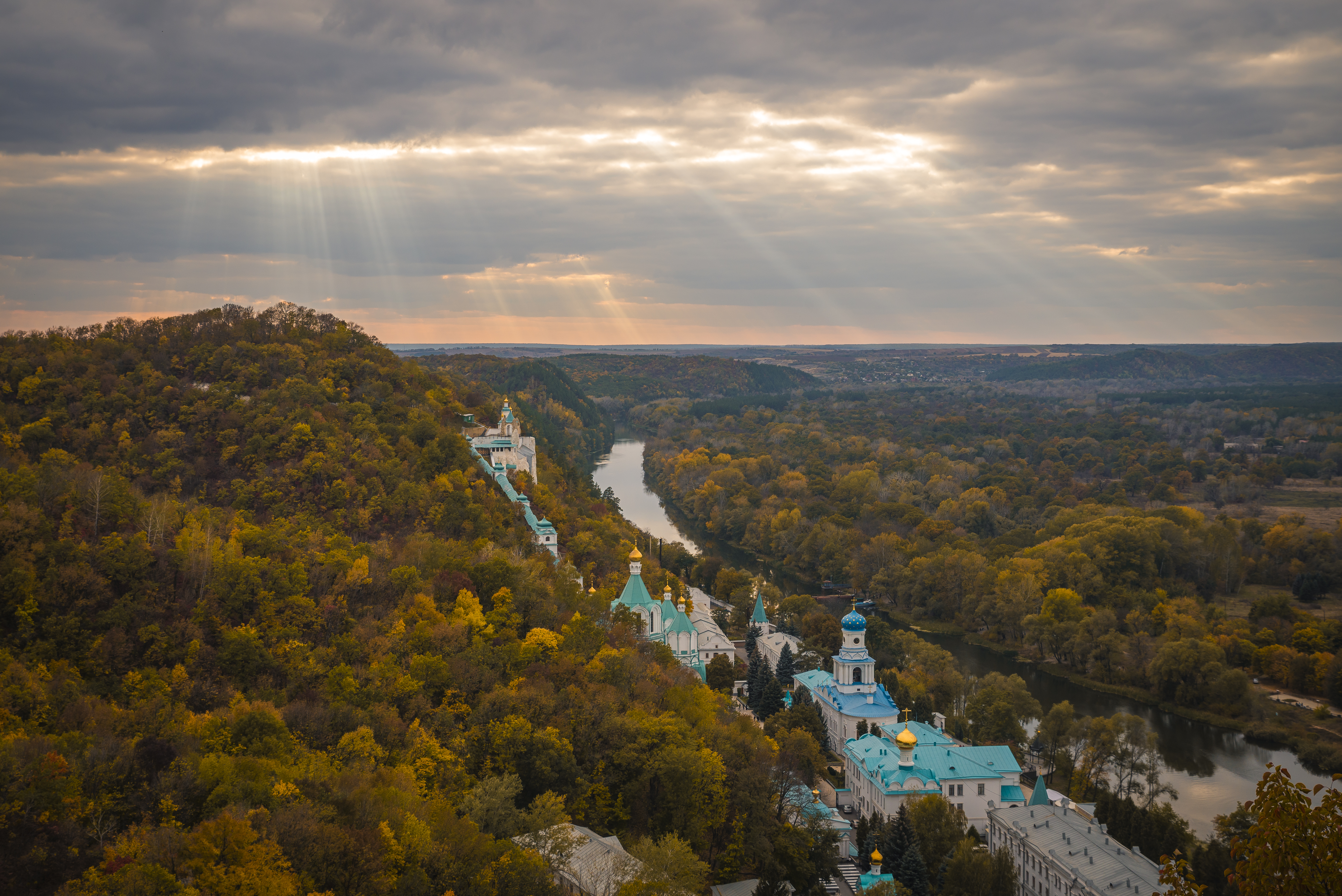
But over the past ten years it has acquired yet another crucial role. It has become an island of peace in the midst of the Donbas conflict.
The Sviatohirsk Lavra is located in the Kramatorsk district of Donetsk Region and, since the beginning of the conflict in 2014, has been forced to live close to the front line. This turned it into a center of attraction for military refugees from villages and towns that suffered from the war both before the full-scale invasion and after it.
The Lavra and its brotherhood, under the leadership of Metropolitan Arseniy, sheltered and fed thousands of refugees, provided what medical assistance they could, and organized education for children. This large-scale humanitarian mission, in which other eparchies of the UOC also took part by bringing food to the Lavra, lasted for years and continues to this day.
🔴On the same day, April 24, SBU officers served a notice of suspicion on the abbot of the Lavra, Metropolitan Arseniy, and arrested him. From that moment until today, he has remained deprived of liberty, since immediately after the arrest, on the night of April 24–25, the court chose a preventive measure in the form of detention.
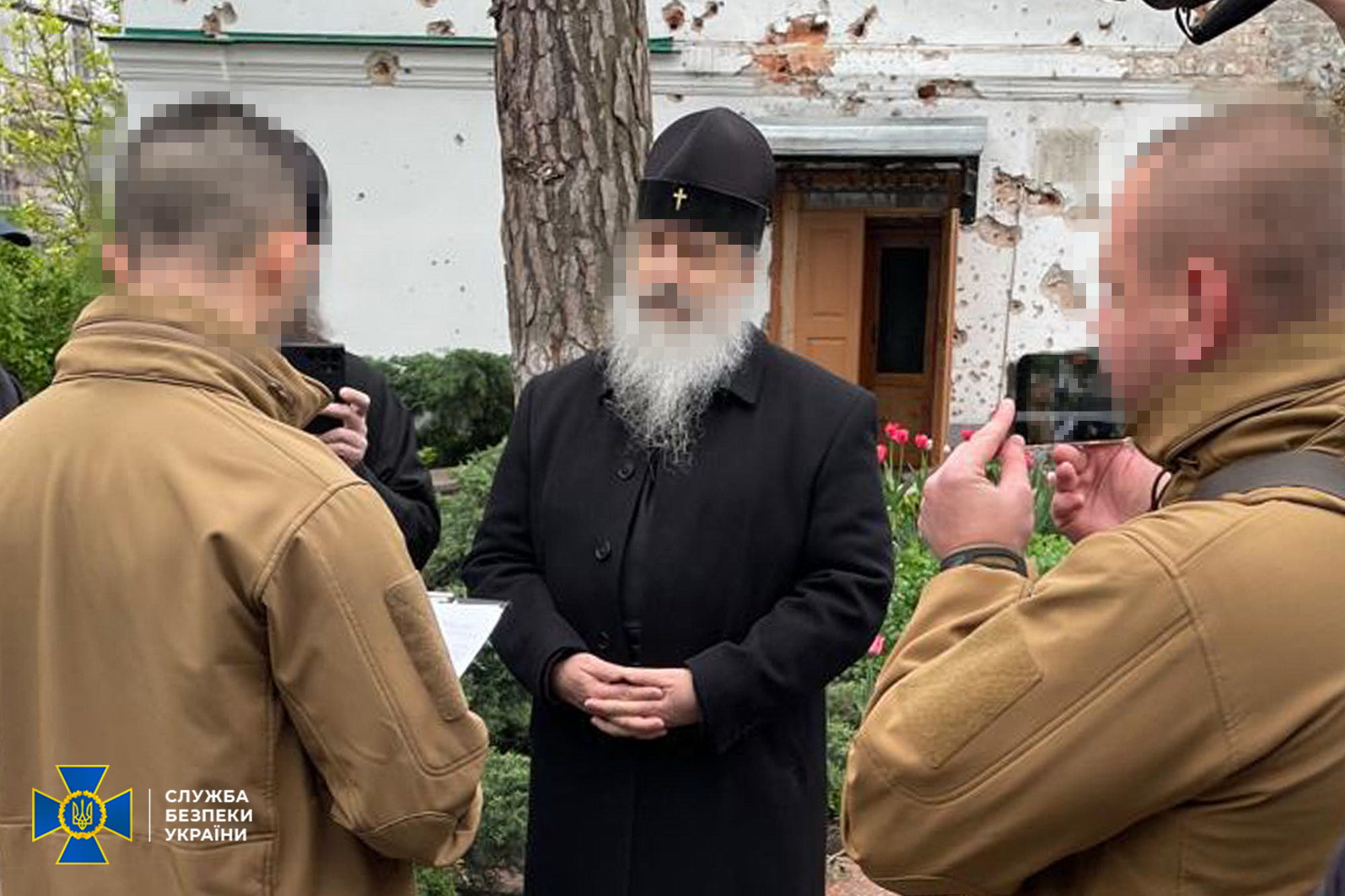
Initially for 60 days, and then repeatedly and groundlessly extending his detention in the SIZO (a pre-trial detention facility that is, de facto, a prison), many times until the end of October 2025, when the metropolitan was mockingly released on bail.
• What was Metropolitan Arseniy accused of? And for what was he held in the SIZO for a year and a half?
The bishop was served a notice of suspicion under Part 2 of Article 114-2 of the Criminal Code of Ukraine – “dissemination of information about the movement, relocation, or location of the Armed Forces of Ukraine, with the possibility of their identification on the ground.”
This article, introduced in Ukraine at the height of the invasion in the spring of 2022, provides for punishment of up to eight years’ imprisonment.
According to the SBU and the investigation , Metropolitan Arseniy allegedly disclosed such information during a public sermon in the Lavra, delivered in September 2023 – eight months before he was formally notified of suspicion.
That is, if one is to believe the SBU, it took them eight months to discover the elements of a crime in this sermon, and on that basis to come with searches to the Lavra and place the bishop in custody.
From this alone one may at least conclude that no harm was caused to the Armed Forces of Ukraine by this supposed “disclosure,” otherwise they would have come for Metropolitan Arseniy very quickly and prosecuted him under the far more serious Part 3 of this article.
This is how the SBU presented the notice of suspicion against Metropolitan Arseniy on its website, in a publication titled: “The SBU reported suspicion against the metropolitan of the Sviatohirsk Lavra who ‘tipped off’ the Rashists about the positions of the Armed Forces of Ukraine in Donetsk Region.”
“The Security Service documented the subversive activity of the abbot of the Sviatohirsk Lavra of the UOC (MP), Metropolitan Arseniy. According to the investigation, the cleric ‘handed over’ to the occupiers the locations of checkpoints of the Defense Forces in the Kramatorsk district of Donetsk Region.
This occurred during his liturgy. Then the vicar, on video recording, named to the parishioners the addresses of Ukrainian military checkpoints. Subsequently, this video was published on the Lavra’s website and in a local Telegram channel group.
In this way, the cleric tried in a veiled manner to ‘leak’ to the aggressor the locations of Ukrainian checkpoints in a frontline area.”
Thus, already on the day of detention – before the end of the investigation and, all the more, before any court verdict – the SBU website labels what happened as “subversive activity” and an “attempt to leak to the aggressor” valuable information, that is, as deliberate criminal acts. The SBU and the prosecutor’s office presented no evidence for these claims, and did not present any during the subsequent year and a half of imprisonment and abuse.
• But was there any disclosure of sensitive information in that sermon at all?
Anyone who wishes can listen to this sermon – it is publicly available.
In this nine-minute sermon, delivered on the eve of the Feast of All Saints of Sviatohirsk (the Synaxis of the Sviatohirsk Saints) on September 23, 2023, we hear the metropolitan’s indignation at the discrimination against the faithful of the UOC that pilgrims to the Lavra faced during those days.
This indignation had a direct cause. On that very day, September 23, pilgrims and people transporting humanitarian aid to the Sviatohirsk Lavra for the large annual feast of the Synaxis of the Sviatohirsk Saints began to be stopped at newly installed checkpoints. They were subjected to thorough checks, their passport data and phone numbers were recorded, and they were forced to wait for hours for permission to pass, without any reasonable grounds – or were not allowed through at all.
Some never made it past this cordon. They did not wait it out, could not endure it, and did not reach the Lavra.
According to the metropolitan, there had been no such checks or travel bans either before or after – they were introduced precisely for the feast day. And all explanations given by the SBU only proved the artificial, anti-church, and discriminatory nature of these measures. It was a provocation and an act of contempt for the civil rights of Orthodox Ukrainians.
That is why in the sermon we hear words of sorrow and astonishment, denunciation and condemnation of the criminal injustice toward Orthodox believers, whom the Ukrainian authorities subject to groundless restrictions and intimidation.
At the same time, nothing of the sort is applied to any other confession in Ukraine – not even to foreigners. As an example, the metropolitan points to the exceptionally lenient attitude of the Ukrainian authorities toward Hasidic pilgrims, who every year travel en masse and without restrictions to Uman for the celebration of Rosh Hashanah, despite the ongoing hostilities. This was the case again this year, literally just days earlier, in mid-September, and no Hasidic pilgrims were subjected to such humiliations and inconveniences.
Meanwhile, our believers are being prevented even from holding traditional cross processions.
“They stand there, checking, recording passports, photographing them. They write down everyone’s email address and phone number. Well, this is a violation of legal rights. Did they record the data of the 32,000 Hasids in Uman who came to celebrate the New Year in the same way? And if one religious confession is allowed to make pilgrimages, then there must be equality for other religious confessions as well. And if foreign citizens came and celebrated their religious feast, why are citizens of Ukraine, who by passport are native to this land, in their own homeland – why are we not allowed to go and pray to the saints who were glorified here, on the land of Ukraine?
And that is precisely why we came. To place ourselves, our families, our husbands and sons who are at the front, into God’s hands – under the protection of the Mother of God, under the prayerful intercession of the Sviatohirsk Saints. We came to pray for them. We came to pray for our fatherland, for a swift peace in our fatherland – for that is why we gathered, is it not, brothers?” (The flock responds approvingly, “Yes!”)
“And so people asked that we pray for this to be somehow resolved – this situation with the pilgrims not being allowed into the Lavra. And I ask for all your prayers as well.
Because this document-checking operation is scheduled for only two days – today and tomorrow. Before this they did not check, and after tomorrow afternoon, I think, they will not check either. Because their main goal is to prevent this.
At first, when I called the SBU, they explained to me: ‘Vladyka, do not worry, this is just a routine document check, this happens sometimes, here or there in the region.’ But I say – this is not a check. People are not being let through! Then they told me: ‘Well, we must avoid any large gatherings of people.’ Well then, I say, go and say this near Nova Poshta in Sloviansk and at the Sloviansk market – places where large crowds naturally gather for everyday reasons. And say this in Uman as well, where the Hasids were celebrating. Why did you not say this there? They came by trains, by buses, by private cars, through Poland – 32,000 pilgrims.
Are we not the same on our own land?
Therefore, brothers and sisters, I ask for holy prayers. Temptations, of course, exist. But nevertheless, the Feast exists as well. And this temptation must not interrupt our prayerful disposition. We came to pray. And we will pray. Yes, this is happening, yes, unfortunately. We will pray also for those who were turned back and could not get through. And for those who are now asking for prayers so that they may pass. We will pray for everyone, because that is what the Lord commanded us.”
Probably these emotions – these words of pain and disappointment from the abbot of a monastery who endured many days of bombardment, blockades, the deaths of brethren, destruction and fires, who for years fed and sheltered thousands of refugees – will be understood by anyone who has a heart and common sense.
And it is precisely these words, exposing the deliberate and obvious discrimination and the violation of the rights of UOC believers by the Ukrainian authorities, as well as the willingness to speak about this problem openly and to the whole world, that, in our view, constitute the true reason for the repression against Metropolitan Arseniy – for which a case of alleged “disclosure of military information” was fabricated.
It was precisely this – the courage to call things by their proper names and to ask uncomfortable questions – that could not be forgiven to the humble metropolitan, whose patience finally ran out in the face of the lawlessness and suffering already inflicted on his monastery by politicians of all stripes.
Moreover, the neutralization of the abbot of one of the three Lavras of the UOC clearly fits into the openly stated strategy of the authorities to seize and re-subordinate to themselves and to their pocket church, the OCU, key cultural and religious sites and historical shrines belonging to the UOC. To strike at its heart – as has already happened with the Kyiv-Pechersk Lavra, and as is happening right now with the Sviatohirsk and Pochaiv Lavras. No one is hiding these plans.
🔴 Let us return to what the SBU and the court are trying to present as the alleged “leak to the enemy of the addresses of checkpoints,” and see for ourselves that the corpus delicti has been cynically invented.
The very episode to which the executioners have clung is found in the segment from the 15th second to the end of the second minute of the video. This excerpt alone is sufficient to understand what the metropolitan is speaking about, how he speaks, and in what context.
The specific mention of checkpoints occurs between 1:12 and 1:23 – that is, for ten seconds.
Let us quote everything the metropolitan said about the checkpoints, stripped of all context, exactly as it was said:
“…But today there are three posts standing in Tetyanivka (a village adjacent to the Lavra – ed.). One is on the hill near Artem, there is a post down here, and one already at the end of Tetyanivka at the entrance to the monastery. They are standing there, checking people, recording passports, taking photographs…”
And where are the addresses here? Where is the so-called possibility of “identification on the ground”?
You will find no precision in these words, and certainly no addresses of checkpoints of the kind described by the SBU.
How, for example, is one supposed to “identify on the ground” what the metropolitan called “a post down here”? What kind of address is this, and what coordinates can be given for this “down here”? Would any experienced intelligence officer – including those working for the SBU – be able to point on a map to a location he could clearly calculate from the words “down here”?
And what does “near Artem” mean? How large is this “near,” and on which side of it? Or “at the end of Tetyanivka” – where exactly is that? Which street, which house number, which coordinates?
Who, exactly, “leaks coordinates” like that?
And most importantly – why?
What could be more absurd, when every local resident (and there are thousands of them) has a smartphone with messengers through which anything can be quietly and secretly transmitted in detail, with geolocation and photographs? When there are drones and satellites?
What would be the point, in such a situation, for the metropolitan to risk himself by conveying information in such a ridiculous manner, even if he truly were someone’s agent? Is there even a semblance of logic here? And what military value could such utterly vague information have – not even approximate locations of some ordinary, temporary checkpoints that appeared that very morning in order to intimidate believers and would likely disappear a day later?
For whom could these checkpoints have posed a threat or constituted a valuable target, when in those days the nearest front line was 40 to 70 kilometers from Sviatohirsk, and fierce battles involving real, large military formations were taking place there?
The absurdity of the alleged corpus delicti and of the entire accusation is more than obvious. As is the real meaning of the sermon, in which the metropolitan mentioned these ill-fated checkpoints merely for the sake of concreteness when describing how, and by whom, the rights of believers were being restricted.
We recommend listening to the entire nine-minute sermon in order to understand what Metropolitan Arseniy is truly being persecuted for – for criticizing religious discrimination and the abuse of believers of the UOC by the Ukrainian authorities.
🔴There was no act whatsoever that could correspond to the formulations baselessly applied by the SBU – “handing over to the occupiers the locations of checkpoints” or “veiledly leaking to the aggressor the places of deployment.” And there is certainly not a single sign that such an absurd “transfer of data” was intentional.
And yet for this invented and imaginary crime, from which it is obvious that no one suffered any harm, the metropolitan was kept in custody for a year and a half and subjected to various forms of abuse that threatened his life and health.
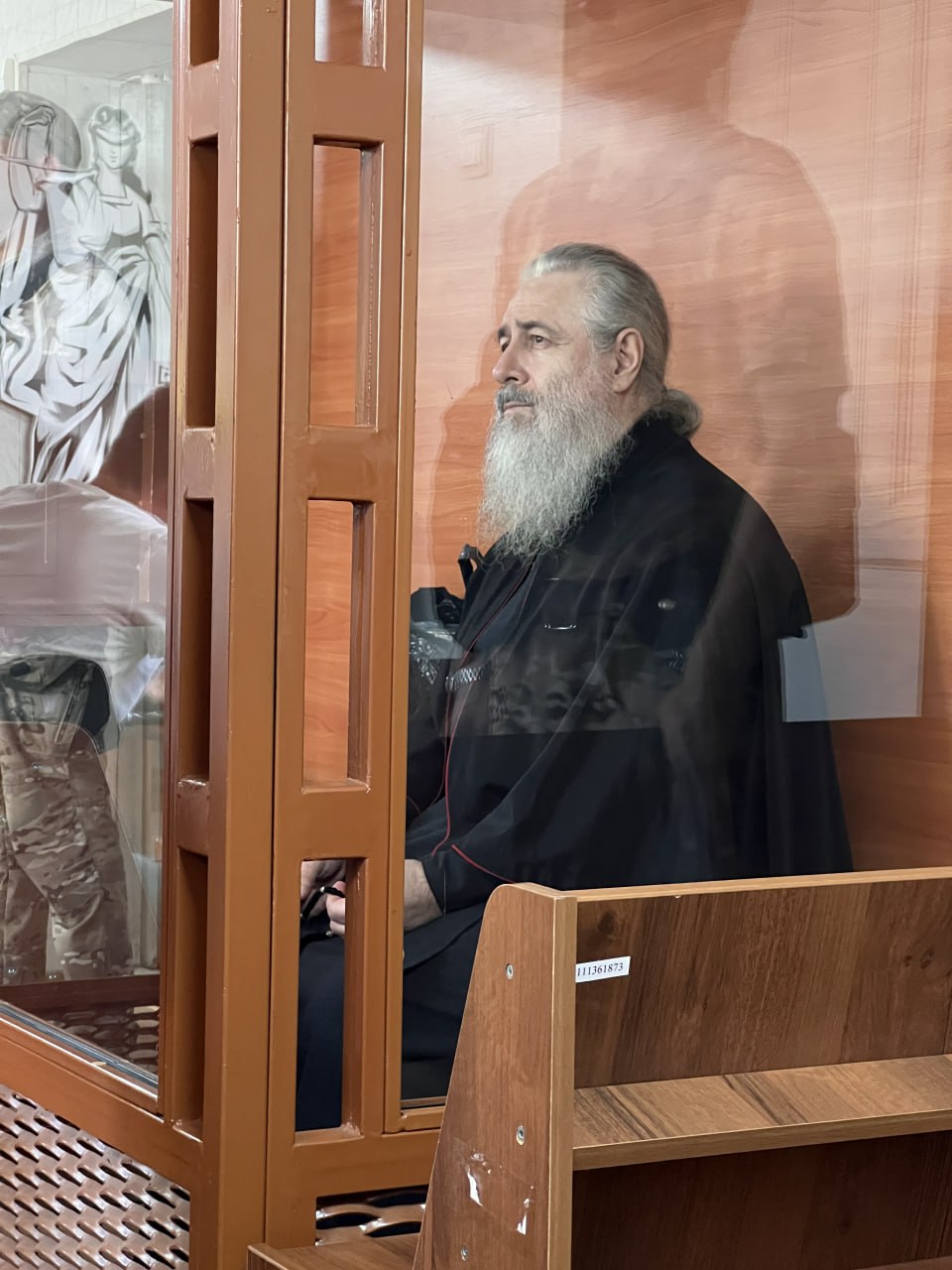
The bishop was held in a pre-trial detention center where it was cold in winter and unbearably hot in summer, while the trips to court from Dnipro to another city, Sloviansk, hundreds of kilometers away, turned into a form of torture in which it is hard to discern any practical purpose other than deliberate torment.
Let us quote the Lavra’s website (On the anniversary of the arrest of Metropolitan Arseniy – Holy Dormition Sviatohirsk Lavra), which more than anyone else conveyed the story and details of these ordeals:
“Metropolitan Arseniy spent his birthday (June 21) in the courtroom. On that day, the court hearing lasted all day, from 8:00 a.m. to 8:00 p.m. On the 19th anniversary of his episcopal consecration, December 5, 2024, his term of detention was once again extended.
The trips to court hearings in Sloviansk and then back to the Dnipro SIZO during the summer period caused the metropolitan particular suffering.
The vladyka was transported in a prison van intended for intra-regional, that is, short transfers, in a ‘glass’ – a cramped box measuring 50 cm × 70 cm × 150 cm, where it is impossible to change one’s position, and in handcuffs.
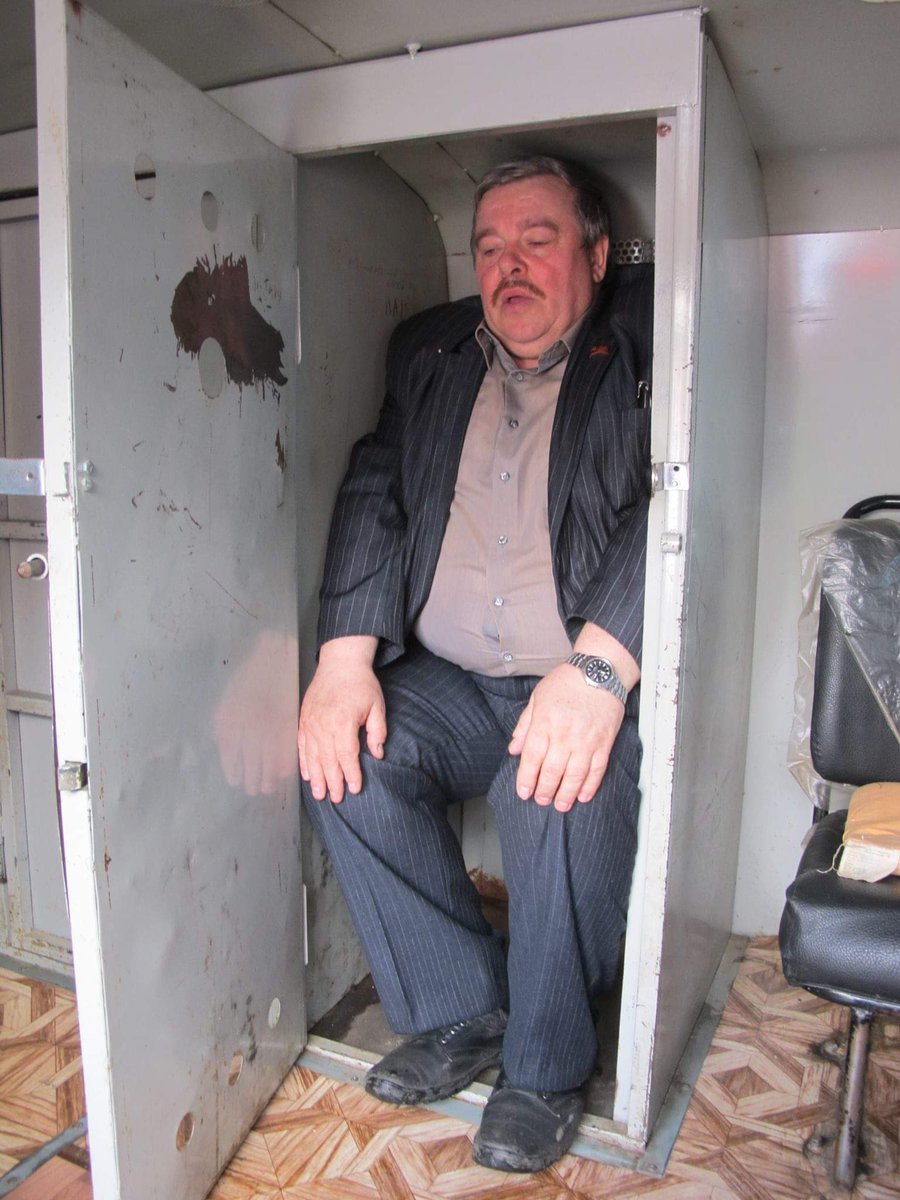
(what a ‘glass’ is – and now imagine seven hours in it on the road, in cold and in heat)
Throughout these transfers, the abbot of the Lavra remained without food or water. The trips lasted no less than 15 hours (300 kilometers, that is, seven or more hours in each direction).
Such transfers were repeated from July until almost the end of September, including on hot days when the temperature in the shade reached 37 to 40 degrees Celsius. In total, the vladyka endured no fewer than ten such transports.
For a person suffering from a number of chronic illnesses, as Metropolitan Arseniy does, these transfers were akin to torture and harmed his health. In particular, after the transfer on August 27, the abbot of the Lavra required two days to recover.
At times, hearings were scheduled for two or three days in a row. In such cases, the vladyka had only a few hours for night rest between them.”
At the end of September, after a series of court hearings on this issue, the defense lawyers managed to secure hearings by videoconference, which eliminated the need for many hours of travel. Since then, Metropolitan Arseniy has participated in the hearings without leaving the SIZO, via online connection.
At the same time, the court effectively refused to make the proceedings public – groundlessly denying online broadcasting of the case against the bishop, as demanded by the defense lawyers and by the public, which was closely following this high-profile case.
Thus, in October 2024, the defense submitted a motion to broadcast the court hearings in the vladyka’s case on the “Sudova Vlada Ukrainy” portal and its YouTube channel of the same name. The court began considering this motion on January 30, 2025, and on February 18 rejected it.
🔴 It should be noted immediately that in Ukraine there have already been several criminal cases related to the real video documentation and subsequent publication of events sensitive to defense – such as the operation of air defense during shelling, or the results of Russian strikes, filmed and published by Ukrainian citizens in open access.
Some of these materials could indeed have had value for the enemy and, at the same time, posed real threats to Ukraine’s defense capability – real, not imaginary.
There have also been prosecutions and punishments for filming violent mobilization, when Ukrainians are caught like cattle on the streets and forcibly shoved into minibuses against their will – where it was allegedly not the process itself, but its publication, that “demoralizes society in the interests of the enemy.”
Even in this one can discern some logic, albeit highly questionable from both legal and moral perspectives. But the metropolitan did nothing of the sort.
🔴And most importantly – in none of the cases known to us did any of the accused spend a year and a half in pre-trial detention, despite systematic publication and far more obvious potential harm from the videos, compared to the extremely vague words about insignificant checkpoints.
Examples:
A blogger who filmed the distribution of draft notices was sentenced to prison | Novini.live
Ukraine begins punishing the publication of videos of violent mobilization
Moreover, all or almost all of those convicted for such acts received suspended or probationary sentences – in essence, they were released from serving their punishment. With Metropolitan Arseniy, the situation was entirely different.
His preventive measure was repeatedly extended and not once revised until October 2025, despite the complete absence of grounds for such a harsh measure as detention of an elderly monk. Defense lawyers regularly sought a more lenient and appropriate preventive measure. A number of members of the Ukrainian Parliament were ready to stand surety for the metropolitan – yet the court remained heartlessly and unjustifiably inflexible.
🔴 from April 25, 2024 to October 27, 2025, during the judicial process on the first charge, Metropolitan Arseniy spent a year and a half in custody. Throughout this time, an elderly and ailing man lived in the harsh conditions of a pre-trial detention center, endured abusive court transfers of 300 kilometers each way, and did not receive proper medical care.
🔴Despite complaints, medical indications, and a deteriorating state of health, the court permitted a medical examination of the bishop only on September 12, 2025 – and even then only on the territory of the pre-trial detencion center.
🔴On September 30, the vladyka had to be urgently hospitalized due to a sharp deterioration in his condition. A cardiologist issued a diagnosis according to which the metropolitan requires surgery, which has still not been performed.
🔴On October 31, 2025, the metropolitan was released from the pre-trial detencion center – only to be detained again immediately upon exit, this time with charges under yet another article.
Once again, a preventive measure in the form of non-alternative detention was imposed.
🔴On February 25, 2026, the Chechelovsky District Court of Dnipro ruled to change the pretrial detention order for the abbot of the Svyatogorsk Lavra from pretrial detention to house arrest.
The court considered the defense's motion to change the pretrial detention order to one that does not require pretrial detention.
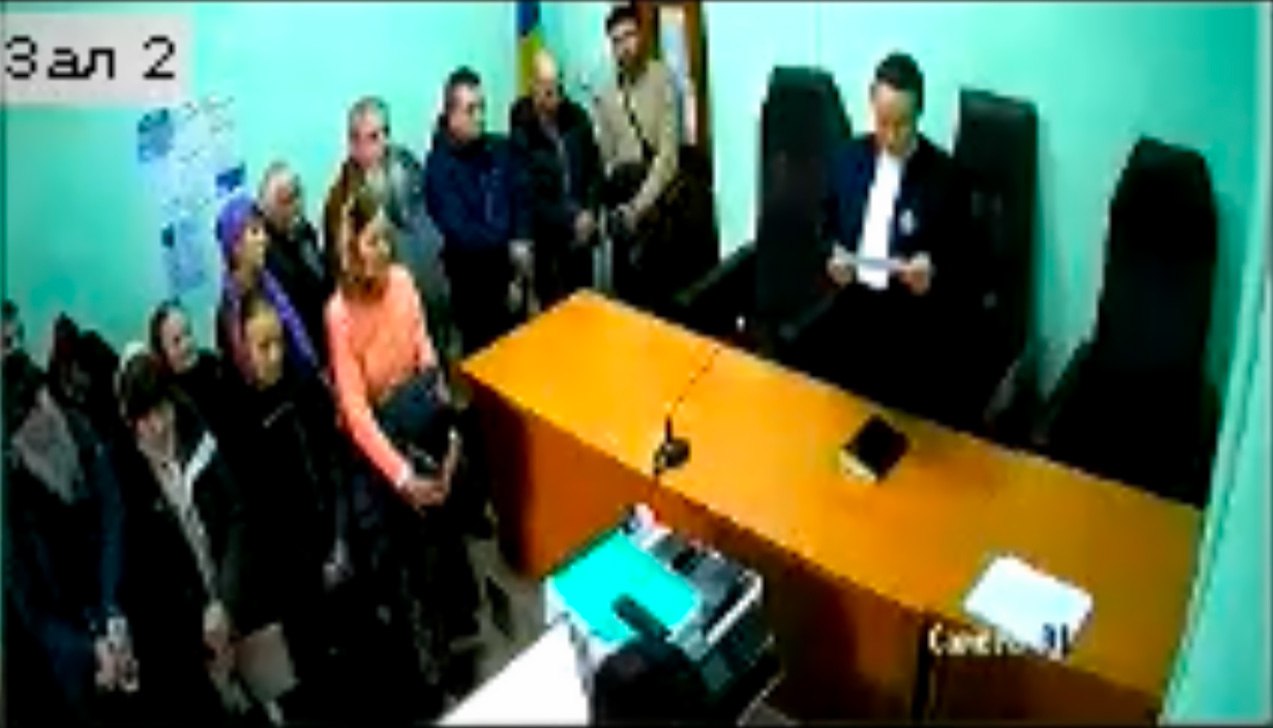
Bishop Arseniy participated in the hearing in person. Believers of the Ukrainian Orthodox Church came to the courtroom to support him. Member of the Verkhovna Rada of Ukraine Viktoria Hryb also participated in the hearing.
The lawyers asked the court to change Bishop Arseniy's pretrial detention, which is an exceptional and extreme measure of restraint in criminal proceedings, to bail, release on bail, or house arrest. They cited relevant precedent cases of the European Court, which considers 24-hour house arrest an alternative to pretrial detention.
As the defense noted, unfortunately, Ukraine leads the world in the number of cases filed with the European Court of Human Rights (ECHR). Every Thursday, the ECHR rules against Ukraine for violations of the rights of people facing judicial proceedings, particularly violations regarding the unreasonableness of extended pretrial detention. Article 5 of the Convention on Human Rights and Fundamental Freedoms stipulates that an arrested person "shall be ensured a trial within a reasonable time or release pending trial."
The lawyers also filed a motion to return the indictment due to its non-compliance with the requirements of criminal procedural law, specifically Article 291 of the Criminal Procedure Code.
After hearing both the defense and the prosecution, Judge Tatyana Vasilyevna Bezruk retired to her deliberation room. Upon returning, she announced the court’s decision: to replace the preventive measure with round-the-clock house arrest until April 25, 2026, without the use of electronic monitoring.
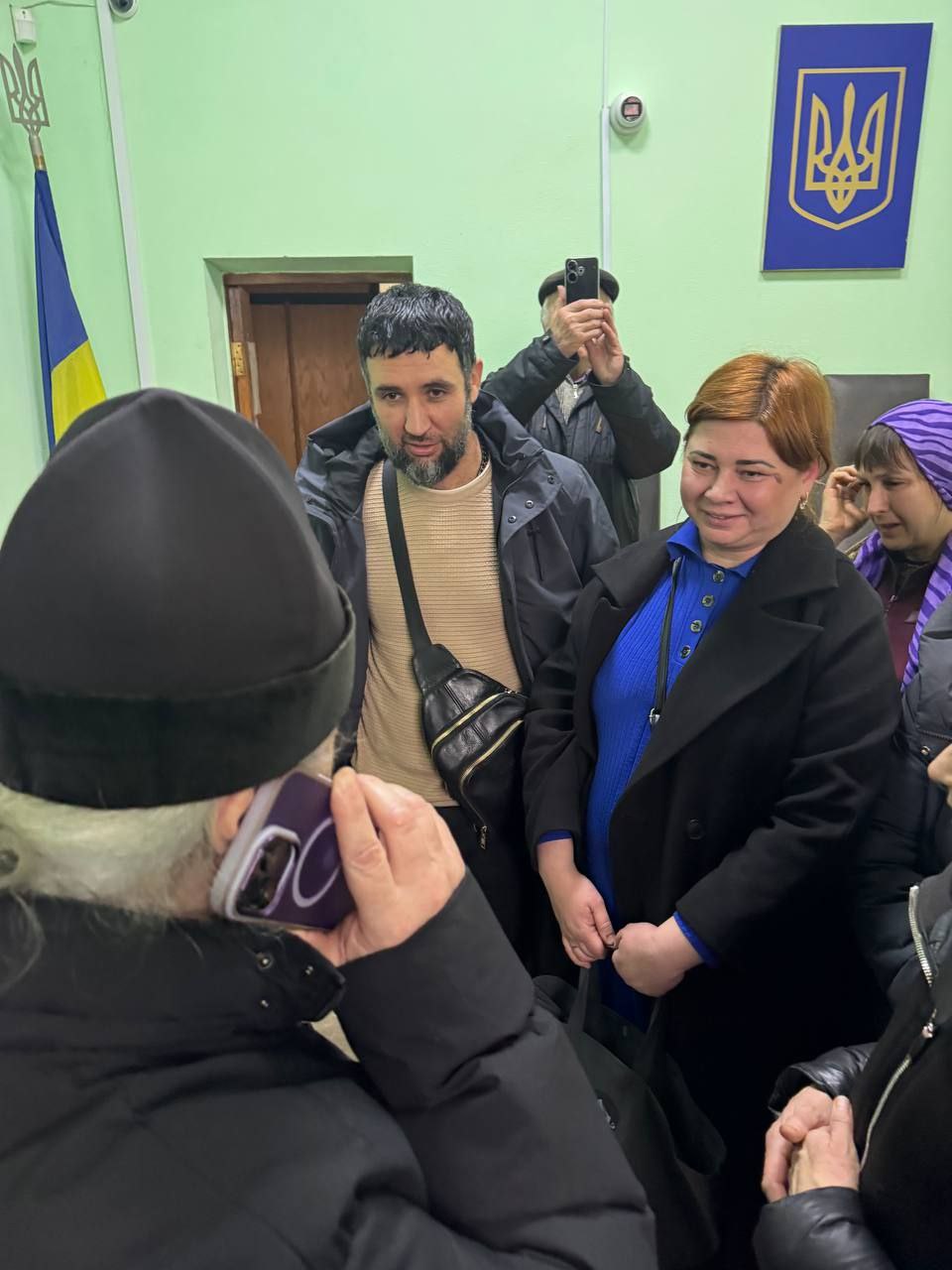
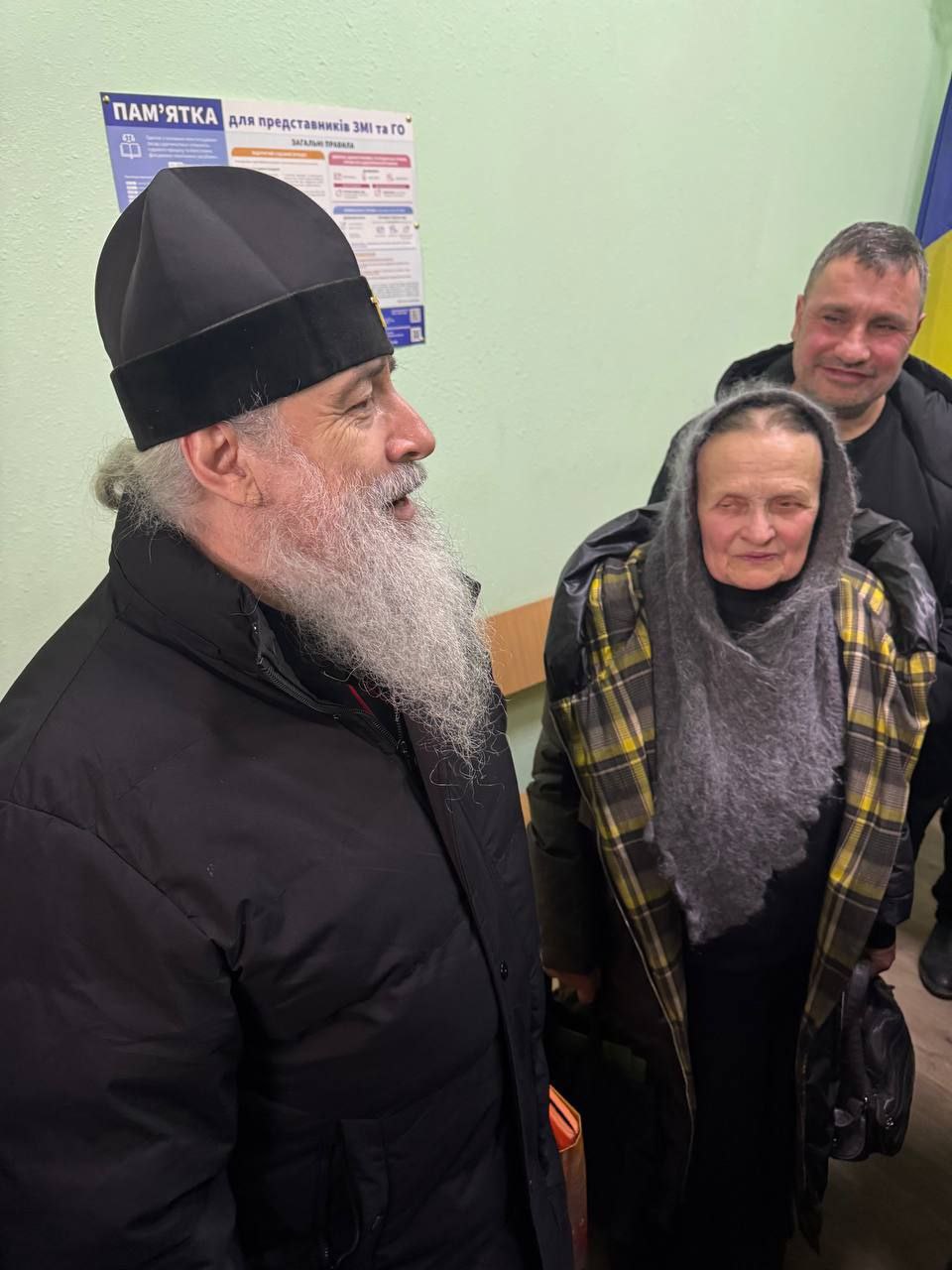
Bishop Arseny was released from custody right in the courtroom.
The court denied the petition to return the indictment.
The decision cannot be appealed.

The first UOC priest officially killed on the frontline as a result of the unlawful mobilization.

Archimandrite, abbot of the Monastery of All Saints of the Carpathian Rus of the Ukrainian Orthodox Church
The court imposed a preventive measure on Fr. Feognost in the form of night-time house arrest.