

Orthodox journalists of the UOJ and a priest human rights defender who endured detention in a pre-trial detention center
Priest Serhii Chertylin, Archpriest of the Ukrainian Orthodox Church, human rights defender,
born in 1989, Kyiv (formerly Kherson Region; he left following the occupation)
Volodymyr Bobechko, news writer, journalist,
born in 1973, Kyiv
Valerii Stupnytskyi, journalist, editor,
born in 1973, Kyiv
Andrii Ovcharenko, journalist, editor, media manager,
born in 1979, Kyiv
🔴 On March 12, 2024, officers of the Security Service of Ukraine carried out mass searches of workplaces and private residences of Ukrainian journalists and human rights defenders. A series of detentions and arrests took place simultaneously.
The searches targeted employees of the online outlets Union of Orthodox Journalists (UOJ) and Pershyi Kozatskyi (‘First Cossack’), the civic organization Myriany (‘Laity’), and the human rights initiative Center for Legal Protection.
Journalists – including former employees – human rights defenders, as well as administrative staff, were presented with criminal charges of varying severity, including offenses punishable by life imprisonment. These included high treason and the creation of an organized criminal group.
🔴 On that day, searches were conducted at the homes of approximately fifteen individuals. Notices of suspicion were prepared and served on 12 citizens of Ukraine or their relatives.
·🔴Four journalists and human rights defenders – Archpriest Serhii Chertylin, Andrii Ovcharenko, Valerii Stupnytskyi, and Volodymyr Bobechko – were arrested and placed in a pre-trial detention center.
All four were given a preventive measure in the form of detention in custody for a period of two or three months.
In particular, on March 14, 2024, the Solomianskyi District Court of Kyiv, after considering a motion by an SBU investigator, ordered Archpriest Serhii Chertylin to be held in custody for two months.
Similar decisions were taken in a conveyor-like manner with respect to other detainees in the UOJ case.
· The SBU described its actions as the “neutralization in Kyiv of a criminal organization that carried out information sabotage on the orders of the FSB”.
According to the SBU, “the perpetrators mass-produced and disseminated pro-Kremlin narratives and provocative messages intended to destabilize the socio-political situation and incite religious hatred in Ukraine”.
No specific examples of such messages were provided.
(Source: Official website of the SBU)
🔴The SBU claims that “based on the collected evidence, four detainees and ten other members of the criminal organization were notified of suspicion under the following articles of the Criminal Code of Ukraine:
– Part 2, Article 111 (high treason committed under conditions of martial law);
– Part 6, Article 111-1 (collaboration activity);
– Part 4, Article 28; Parts 1 and 2, Article 255 (creation of and participation in a criminal organization);
– Part 3, Article 161 (incitement of religious enmity and hatred committed by an organized group);
– Parts 1 and 2, Article 436-2 (justification, recognition as lawful, or denial of the armed aggression of the Russian Federation against Ukraine).”
A detailed list of charges brought against the three journalists and the human rights defender Fr. Serhii:
All four detainees are charged with the following offenses:
– participation in a criminal organization (Part 2, Article 255) – imprisonment from 5 to 12 years with confiscation of property;
– incitement of religious enmity committed by a criminal organization (Part 3, Article 161) – imprisonment from 5 to 8 years.
In addition, Archpriest Serhii Chertylin, Valerii Stupnytskyi, and Andrii Ovcharenko are charged with:
– high treason committed under conditions of martial law (Part 2, Article 111) – imprisonment for 15 years or life imprisonment with confiscation of property;
– justification, recognition as lawful, or denial of the armed aggression of the Russian Federation against Ukraine in 2014, and glorification of its participants, committed by a criminal organization (Part 4, Article 28 in conjunction with Part 1, Article 436-2) – corrective labor for up to 2 years, probation supervision for up to 3 years, or imprisonment for up to 3 years;
– production and dissemination of materials containing justification, recognition as lawful, or denial of the armed aggression of the Russian Federation against Ukraine in 2014, and glorification of its participants, committed by a criminal organization (Part 4, Article 28 in conjunction with Part 2, Article 436-2) – restriction or deprivation of liberty for up to 5 years, with or without confiscation of property;
– justification, recognition as lawful, or denial of the armed aggression of the Russian Federation against Ukraine in 2014, glorification of its participants, and production and dissemination of relevant materials committed by a criminal organization using mass media (Part 4, Article 28 in conjunction with Part 3, Article 436-2) – imprisonment from 5 to 8 years, with or without confiscation of property.
Volodymyr Bobechko – a person who had worked at UOJ only recently and had done nothing other than rewriting news from other, mostly Ukrainian, sources – in addition to participation in a criminal organization and incitement of religious enmity, is also charged with:
– collaboration activity, namely conducting information activities in cooperation with the aggressor state aimed at supporting it (Part 6, Article 111-1), which provides for imprisonment from 10 to 12 years, deprivation of the right to hold certain positions or engage in certain activities for 10 to 15 years, with or without confiscation of property.
This set of grave charges under Ukrainian law, if proven, could result in lengthy prison sentences for the journalists, up to life imprisonment – a prospect repeatedly used by the SBU in its statements to alarm the public.
It is important to note that the sanctions under Part 2, Article 111 and Part 2, Article 255 include mandatory confiscation of all property. This means that if prisoners of conscience are convicted under these articles, their wives and children will be thrown out of their homes onto the street, and all their property will be transferred to the state.
· What are Orthodox journalists accused of, and what are the charges based on?
The texts of the notices of suspicion, the case materials, and the indictment unequivocally demonstrate that employees of the UOJ are being persecuted and prosecuted exclusively for their lawful journalistic activity – for articles and reports published on the UOJ website that address facts of violations of the rights of believers of the Ukrainian Orthodox Church, as well as general events of religious life.
A list of these entirely lawful, publicly available articles, with links to them, is included in the notices of suspicion, the case materials, and the indictment.
Some of the so-called “criminal articles” are complete or almost verbatim reprints and rewrites of news from other websites – to which the SBU has no claims whatsoever.
Other articles are built on verbatim quotations from officials – and again, the SBU has no questions for those officials, but it does bring charges against the UOJ.
According to the prosecution, articles defending the UOC and even neutral news materials allegedly incite religious hatred. Moreover, the texts were allegedly created deliberately, jointly, and as part of a team – which means, according to this logic, that the UOJ constitutes an organized criminal group.
Most importantly, the SBU asserts – based purely on conjecture – that we commit these supposed dangerous acts (publishing news and articles) in order to “assist the aggressor state during wartime and undermine Ukraine’s national security and sovereignty.” Thus, in the SBU’s opinion, we are guilty of state treason.
Significantly, the prosecution does not even attempt to challenge the factual accuracy of the publications. They are simply unable to accuse the UOJ of spreading false information, since they have not even tried to do so. In effect, the SBU implicitly acknowledges that the UOJ’s articles are truthful and produced according to journalistic standards, based on verifiable sources.
More details can be found in the UOJ’s appeal to international human rights organizations.
· Subsequently, the period of detention was extended several times following motions by the prosecution to prolong the pre-trial investigation. At the same time, no new evidence was added to the case.
This occurred despite objections by the defense regarding the excessively harsh preventive measure for journalistic activity in a situation where guilt had not been proven, despite medical indications for three of the detainees, and despite appeals.
It is obvious that the prosecution and the authorities behind it, realizing the weakness of their position and the absence of evidence against the UOJ journalists, simply dragged out the process and extended the journalists’ detention in the pre-trial detention center – de facto punishing them with imprisonment without the need to prove their guilt.
· Thus, on April 8, 2024, the Court of Appeal left unchanged the preventive measure for Fr. Serhii Chertylin in the form of detention in custody.
· On May 8, 2024, during a court hearing, the wife of UOC priest Serhii Chertylin, Yuliia, spoke about her husband’s health condition, emphasizing that his state was extremely serious and that he had recently required surgical intervention.
In addition, the priest requires constant care and proper nutrition – conditions that cannot be ensured in a pre-trial detention center.
The court ignored her words and requests, and the priest was left in the Lukianivka pre-trial detention center.
🔴On June 7 and 10, 2024, the Solomianskyi District Court of Kyiv granted the prosecution’s motions and extended the pre-trial investigation in the cases of the UOJ journalists and UOC Archpriest Serhii Chertylin by three months. The journalists’ detention in the pre-trial detention center was also extended for the same period – without the right to post bail.
At the same time, the court rejected the motion of the lawyer representing UOJ journalist Andrii Ovcharenko, who sought a hospital-based medical examination for his client, despite having all relevant medical documents.
🔴At the hearing on June 10, 2024, Volodymyr Bobechko and Andrii Ovcharenko stated that they require medical assistance due to chronic illnesses.
In particular, Bobechko reported that part of his lungs had been removed and that he has a number of other chronic conditions requiring constant medical supervision, examinations, and treatment.
🔴Andrii Ovcharenko has been diagnosed with a chronic neurological condition – osteochondrosis of the lumbar spine. Andrii emphasized that recently he had been unable to leave his home for extended periods, as he used special spinal equipment several times a day, which is located at his residence.
Despite the journalists’ categorical refutation of the accusations against them, supported by factual evidence of their baselessness, and despite all medical prescriptions and expert conclusions, the judges left them in prison – again, without the right to post bail.
🔴On June 11, 2024, the lawyer for Orthodox journalist Valerii Stupnytskyi questioned the results of the state expert examination conducted with respect to materials published by the UOJ.
He presented specific arguments and examples demonstrating that the Russian Federation is not mentioned on the UOJ website in a positive sense. On the contrary, it is referred to as an aggressor state.
How, on that basis, the examination concluded that the materials contained “glorification of the aggressor state,” “denial of aggression,” or “informational work in the aggressor’s interests,” as claimed by the SBU and the prosecution, remains unanswered.
NB. The indictment in the UOJ case runs to 341 pages, yet contains no evidentiary basis whatsoever.
The indictment includes:
o no evidence of cooperation between the prisoners of conscience and representatives of the aggressor state;
o no recordings of phone calls, correspondence, or any communication with Russian intelligence;
o no evidence of receiving instructions or payment from the Russian Federation;
o no victims and no damage described, even hypothetically;
o no confrontations;
o no interrogations;
o no other facts or proof of any kind.
🔴On March 12, 2024, officers of the Security Service of Ukraine (SBU) conducted mass searches in both the workplaces and homes of Ukrainian journalists and human rights defenders. Several arrests took place simultaneously.
The searches targeted employees of the online outlets Union of Orthodox Journalists (UOJ) and Pershyi Kozatskyi (‘First Cossack’), the civic organization Myriany (‘Laity’), and the human rights initiative Center for Legal Protection.
Journalists – including former employees – human rights activists, and administrative staff were charged with criminal offenses of varying gravity, including those carrying punishments up to life imprisonment. Among them were accusations of state treason and participation in an organized criminal group.
🔴 Searches were conducted at the homes of roughly fifteen individuals. Notices of suspicion were prepared and served to twelve Ukrainian citizens or their relatives.
🔴 Four journalists and human rights defenders – Archpriest Serhii Chertylin, Andrii Ovcharenko, Valerii Stupnytskyi, and Volodymyr Bobechko – were arrested and placed in a pre-trial detention center (SIZO).
🔴 All four were assigned preventive measures in the form of custody in SIZO for two or three months.
🔴On March 14, 2024, the Solomianskyi District Court of Kyiv, after reviewing a motion from the SBU investigator, ordered two months of detention for Archpriest Serhii Chertylin:
Similar decisions were issued conveyor-style for all other detainees in the UOJ case.
The SBU described its actions as the “neutralization in Kyiv of a criminal organization conducting information sabotage on orders from the FSB.”
According to their claims, “the offenders mass-produced and disseminated pro-Kremlin narratives and provocative messages designed to destabilize the socio-political situation and incite religious hatred in Ukraine.”
No examples of such messages were provided.
(Source: Official website of the SBU)
The SBU asserts that “based on collected evidence, the four detainees and ten additional participants in the criminal organization have been notified of suspicion under the following articles of the Criminal Code of Ukraine:
– Part 2, Article 111 (state treason committed under conditions of martial law);
– Part 6, Article 111-1 (collaborationist activities);
– Part 4, Article 28; Parts 1 and 2, Article 255 (creation of and participation in a criminal organization);
– Part 3, Article 161 (incitement of religious hostility and hatred committed by an organized group);
– Parts 1 and 2, Article 436-2 (justification, recognition as lawful, denial of armed aggression of the Russian Federation against Ukraine).”
A detailed list of the charges brought against the three journalists and the human-rights defender, Archpriest Serhii.
All four prisoners of conscience are charged with the following crimes:
–participation in a criminal organization (Part 2, Article 255) – imprisonment from 5 to 12 years with confiscation of property;
–incitement of religious hostility committed by a criminal organization (Part 3, Article 161) – imprisonment from 5 to 8 years.
In addition, Archpriest Serhii Chertylin, Valerii Stupnytskyi, and Andrii Ovcharenko are charged with the following:
o state treason committed under conditions of martial law (Part 2, Article 111) – 15 years’ imprisonment or life imprisonment, with confiscation of property;
o justification, recognition as lawful, or denial of the armed aggression of the Russian Federation against Ukraine in 2014, and glorification of its participants, committed by a criminal organization (Part 4, Article 28; Part 1, Article 436-2) – up to 2 years of corrective labor, up to 3 years of probation, or up to 3 years of imprisonment;
o production and dissemination of materials containing justification, recognition as lawful, or denial of the armed aggression of the Russian Federation against Ukraine in 2014, and glorification of its participants, committed by a criminal organization (Part 4, Article 28; Part 2, Article 436-2) – restriction or imprisonment for up to 5 years, with or without confiscation of property;
o justification, recognition as lawful, or denial of the armed aggression of the Russian Federation against Ukraine in 2014, and glorification of its participants, including the production and dissemination of such materials, committed by a criminal organization using mass media (Part 4, Article 28; Part 3, Article 436-2) – imprisonment from 5 to 8 years, with or without confiscation of property.
As for Volodymyr Bobechko — who worked at the UOJ only recently and did nothing beyond rewriting news from other, mostly Ukrainian, sources — he is charged, in addition to participation in a criminal organization and incitement of religious hostility, with:
o collaborationist activity, namely conducting informational work in cooperation with the aggressor state in support of its interests (Part 6, Article 111-1), which carries 10 to 12 years of imprisonment, plus a ban on holding certain positions or engaging in certain activities for 10 to 15 years, with or without confiscation of property.
This set of severe charges under Ukrainian law – if proven – could result in extremely long prison terms for the journalists, up to and including life sentences. The SBU repeatedly emphasized this in its public statements in order to alarm society.
It is important to note that the sanctions under Part 2, Article 111 and Part 2, Article 255 include mandatory confiscation of all property. This means that if the prisoners of conscience were to be found guilty under these articles, their wives and children would be thrown out of their apartments, and all their property transferred to the state.
What exactly are the Orthodox journalists accused of, and what are the charges based on?
The texts of the notices of suspicion, case materials, and indictments unequivocally show that UOJ staff are being prosecuted exclusively for their lawful journalistic work – for articles and reports published on the UOJ website describing violations of the rights of UOC believers, as well as coverage of unrelated events in religious life.
The list of these entirely legal, publicly accessible articles – with links – is reproduced in the notices of suspicion, case files, and the indictment.
Some of the “criminal articles” are full or nearly literal reposts and rewrites of news published on other websites – which the SBU has no issues with whatsoever.
Other articles consist of verbatim quotations of Ukrainian officials – and again, the SBU has no complaints toward those officials, only toward the UOJ.
According to the prosecution’s theory, our articles defending the UOC and even neutral news items allegedly “incite religious hatred.” And because, in their interpretation, we supposedly do this consciously, collectively, and in coordination, the UOJ is labeled an “organized criminal group.”
Most importantly, the SBU asserts – based purely on conjecture – that we commit these supposed dangerous acts (publishing news and articles) in order to “assist the aggressor state during wartime and undermine Ukraine’s national security and sovereignty.” Thus, in the SBU’s opinion, we are guilty of state treason.
Significantly, the prosecution does not even attempt to challenge the factual accuracy of the publications. They are simply unable to accuse the UOJ of spreading false information, since they have not even tried to do so. In effect, the SBU implicitly acknowledges that the UOJ’s articles are truthful and produced according to journalistic standards, based on verifiable sources.
For details, see the UOJ’s appeal to international human-rights organizations: https://spzh.eu/en/zashhita-very/79267-open-appeal-from-the-uoj-to-international-human-rights-organizations
In the following months, the period of pre-trial detention was extended several times at the request of the prosecution to prolong the pre-trial investigation. No new evidence was added to the case.
This occurred despite the defense’s objections that such a harsh preventive measure was wholly disproportionate to purely journalistic activity – particularly in a situation where guilt had not been proven, and despite medical testimony concerning three of the detainees, as well as repeated appeals.
It was obvious that the prosecution and the political authorities behind it understood the weakness of their position and the absence of any evidence against the UOJ journalists, and therefore simply dragged out the process, repeatedly extending their detention in the pre-trial facility – effectively punishing them with imprisonment without any need to prove guilt.
· On April 8, 2024, the Court of Appeal upheld the preventive measure against Archpriest Serhii Chertylin, leaving him in custody.
· On May 8, 2024, at a court hearing, the UOC priest’s wife, Yuliia Chertylina, testified about her husband’s health, stressing that his condition was very serious, that he had recently required surgery, and that he needed constant care and proper nutrition — conditions impossible to maintain in a pre-trial detention center. The court ignored her testimony and plea, and the priest remained in the Lukyanivske detention facility.
· On June 7 and 10, 2024, the Solomianskyi District Court of Kyiv granted the prosecution’s request and extended the pre-trial investigation in the cases of UOJ journalists and UOC Archpriest Serhii Chertylin for another three months. Their detention was likewise extended for that period – without the right to bail.
At the same time, the court rejected the motion of the lawyer representing UOJ journalist Andrii Ovcharenko, who sought a hospital-based medical examination for his client, despite having all relevant medical documents.
· At the June 10 hearing, Volodymyr Bobechko and Andrii Ovcharenko both stated that they required medical assistance due to chronic illnesses. Bobechko testified that part of his lung had been removed and that he suffered from several chronic conditions requiring constant monitoring, examinations, and treatment. Ovcharenko has a chronic neurological disorder – lumbar osteochondrosis – and explained that before his arrest he often could not leave his home for long, as he needed to use special spinal-support equipment several times a day, which remains at his residence.
Despite the journalists’ categorical refutation of the accusations against them, supported by factual evidence of their baselessness, and despite all medical prescriptions and expert conclusions, the judges left them in prison – again, without the right to bail.
· On June 11, 2024, the lawyer representing Orthodox journalist Valerii Stupnytskyi challenged the results of the state linguistic examination conducted on UOJ materials.
He presented concrete arguments and examples showing that the Russian Federation is not mentioned on the UOJ website in a positive light – on the contrary, it is repeatedly referred to as an aggressor state.
How, on that basis, the examination concluded that the materials contained “glorification of the aggressor state,” “denial of aggression,” or “informational work in the aggressor’s interests,” as claimed by the SBU and the prosecution, remains unanswered.
It is important to note that the indictment in the UOJ case runs to 341 pages, yet contains no evidentiary basis whatsoever.
The indictment includes:
o no evidence of cooperation between the prisoners of conscience and representatives of the aggressor state;
o no recordings of phone calls, correspondence, or any communication with Russian intelligence;
o no evidence of receiving instructions or payment from the Russian Federation;
o no victims and no damage described, even hypothetically;
o no confrontations;
o no interrogations;
o no other facts or proof of any kind.
· The degree of incompetence and bias found in the so-called “judicial psycho-linguistic examinations” of texts and video materials in the UOJ case is partially analyzed here.
These examinations – commissioned by the SBU – constitute the foundation of the prosecution’s case. It is worth noting that the institutions behind these “expert analyses” have long been associated with corruption scandals.
· On June 24, 2024, the SBU supplemented the charges with new accusations, alleging that the Orthodox journalists had produced and disseminated the documentary film “‘Hollow Church of Ukraine’: What Happens to the Seized UOC Temples.”
Here is the English version of the film – judge for yourself how much “Russian propaganda” it supposedly contains:
· On August 6, 2024, during an open hearing at the Solomianskyi Court in Kyiv, the court ordered the release of UOC priest Serhii Chertylin on bail.
· On August 16, 2024, after five months in custody, Archpriest Serhii Chertylin was released on bail worth 5 million UAH. The bail was collected by concerned believers. His case is pending.
· On September 9, 2025, the Solomianskyi District Court judge removed SBU investigator Oleh Savenko from the pre-trial investigation in the UOJ case, following numerous documented violations and abuses on his part and repeated motions by the defense.
· On September 25, 2024, during an open hearing at the Solomianskyi Court in Kyiv, investigative judge Viktoriia Kitsiuk changed the preventive measure for UOJ journalist Volodymyr Bobechko, granting release on bail in the amount of 1.5 million UAH.
· On September 27, 2024, the bail was paid, and after six months in pre-trial detention, Volodymyr Bobechko was released. His case continues.
· On October 25, 2025, the SBU announced that it had completed the pre-trial investigation in the “UOJ case” and transferred it to the court for substantive review.
· On November 6, 2024, at the Shevchenkivskyi Court in Kyiv, the judge, granting a defense motion, changed the preventive measure for journalists Ovcharenko and Stupnytskyi, allowing release on bail – 908,000 UAH for Andrii Ovcharenko and 908,400 UAH for Valerii Stupnytskyi. Shortly thereafter, following eight months in detention, they were released.
· On October 31, 2025, personal special economic and other restrictive measures (sanctions) were imposed against all three journalists, against Archpriest Serhii Chertylin, and against the remaining eight Ukrainian citizens involved in the “UOJ case,” pursuant to Presidential Decree No. 810/2025 and the decision of the National Security and Defense Council.
https://www.president.gov.ua/documents/8102025-56981
Fr. Serhii Chertylin:
March 12, 2024 – search
March 12, 2024 – August 16, 2024 – five months of detention in a pre-trial detention center
October 31, 2025 – personal sanctions imposed pursuant to Presidential Decree No. 810/2025 and an NSDC decision
The case has not been closed. Court proceedings continue.
Volodymyr Bobechko:
March 12, 2024 – search
March 12, 2024 – September 27, 2024 – six and a half months of detention in a pre-trial detention center
October 31, 2025 – personal sanctions imposed pursuant to Presidential Decree No. 810/2025 and an NSDC decision
The case has not been closed. Court proceedings continue.
Andrii Ovcharenko:
March 12, 2024 – search
March 12, 2024 – November 6, 2024 – eight months of detention in a pre-trial detention center
October 31, 2025 – personal sanctions imposed pursuant to Presidential Decree No. 810/2025 and an NSDC decision
The case has not been closed. Court proceedings continue.
Valerii Stupnytskyi:
March 12, 2024 – search
March 12, 2024 – November 6, 2024 – eight months of detention in a pre-trial detention center
October 31, 2025 – personal sanctions imposed pursuant to Presidential Decree No. 810/2025 and an NSDC decision
The case has not been closed. Court proceedings continue.
The priest and the journalists are currently free on bail yet remain under personal sanctions that seriously restrict their abilities.
The sanctions imposed include:
o blocking of assets;
o prohibition on distributing media content within Ukraine;
o termination of electronic communications services;
o restrictions on commercial operations;
o forfeiture of state awards of Ukraine.
The case remains open; hearings continue.
One of the individuals persecuted by the authorities in the UOJ case, Archpriest Serhii Chertylin, is a patriot of Ukraine who served in the Kherson region during its occupation by Russian forces. He refused to accept the occupation, publicly condemned Russian aggression, and expressed support for Ukraine. Before long, he was warned that such a position could cost him dearly.
“Our church was a place where Ukraine could still be heard under occupation,” Father Serhii told the publication Dialog.TUT one year before his arrest.
https://dialogtut.online/v-okupacziyi-nash-hram-buv-dlya-lyudej-misczem-de-zvuchala-ukrayina/
Together with his family, he left his native region and moved to the territory controlled by Ukraine because he believed this was his homeland – a country fighting for freedom and democracy. Yet it turned out that his own state had declared war on his Church and on his right to freedom of religion. And when he raised his voice against this, he was thrown behind bars.
https://graty.me/ru/ya-ne-pokinu-svoyu-czerkov-i-svoyu-stranu-sud-arestoval-po-podozreniyu-v-gosizmene-svyashhennika-upcz-mp-kotoryj-pereehal-v-kiev-iz-okkupirovannoj-hersonshhiny/
· Father Serhii Chertylin is accused of conducting “subversive information activities” through the platforms of the organization Miryany. The organization itself officially responded that Father Serhii was not its leader and had no influence whatsoever on its editorial policy or content.
· The Union of Orthodox Journalists , the online outlet “First Cossack” (https://www.facebook.com/1kozaktv/ + t.me/kozakTv1), the public association “Myriany” (https://www.facebook.com/miryany.offpage + https://t.me/miryany) and the Center for Legal Protection have long been reporting on violations of the rights of the faithful of the Ukrainian Orthodox Church, including violations committed by state authorities, politicians, and radical groups. The UOJ, in particular, has been operating since 2014.
“Myriany” and the Center for Legal Protection also provide legal and civic assistance to UOC believers and communities who face persecution, discrimination, and the violent takeover of their churches. In fact, these activities constitute the entirety of their “crimes” and the sum of their supposed guilt.
The criminal charges brought against the Orthodox journalists rest exclusively on the publicly available publications of the Union of Orthodox Journalists, the First Cossack outlet, and the work of Myriany in defending the rights of UOC believers.
That is, they are being prosecuted for reporting factual information about crimes committed against the UOC, for analyzing these events, and for expressing their opinions about them.
Meanwhile, “Myriany” and the Center for Legal Protection are being prosecuted for legitimate human-rights work aimed at defending the rights of UOC believers to freedom of religion and religious practice.
Can criminal cases under grave articles be opened for this, and people thrown into pre-trial detention and put on trial? In Ukraine, as it turns out, they can.
It should be noted that the UOJ editorial team not only reported on the persecution of the UOC but also condemned Russian aggression and publicly countered Russian propaganda regarding Church matters.
The editorial office supported the decision of the Council in Feofania and the position of their Primate. And the very journalists now charged with “high treason” published critical materials concerning the pro-war and unchristian statements of Patriarch Kirill and several prominent figures of the Russian Orthodox Church.
This was pointed out, in particular, on July 19, 2023, when the lawyer of journalist Andrii Ovcharenko read aloud in court an entire series of such publications critical of Russia, the ROC, and their policies.
· On April 2, 2024, during the 55th session of the UN Human Rights Council, information was presented regarding the arrest of UOJ journalists and the priest-human rights defender.
Representatives of the Ukrainian Orthodox Church called on the international community to protect the rights of journalists and lawyers who publish information about violations of the rights of UOC believers.
· Appeal of the UOJ to the Interparliamentary Assembly of Orthodoxy:
· On May 10, 2024, former Polish parliamentarian Eugeniusz Czykwin submitted guarantees to the Ukrainian court on behalf of UOJ journalists Valerii Stupnytskyi, Andrii Ovcharenko, and Volodymyr Bobechko.
· On August 12, 2024, Robert Amsterdam sent an urgent message to Ukrainian President Volodymyr Zelensky concerning the campaign against the Ukrainian Orthodox Church, in which he also mentioned the arrest of the UOJ journalists.
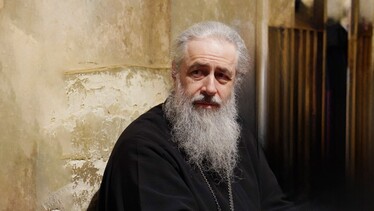
At present, he is being held in custody in the Dnipro pre-trial detention center (SIZO).

The first UOC priest officially killed on the frontline as a result of the unlawful mobilization.

Archimandrite, abbot of the Monastery of All Saints of the Carpathian Rus of the Ukrainian Orthodox Church
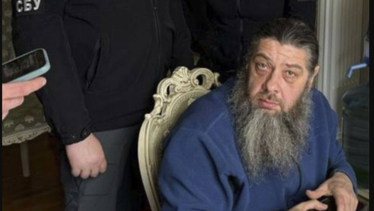
The court imposed a preventive measure on Fr. Feognost in the form of night-time house arrest.